
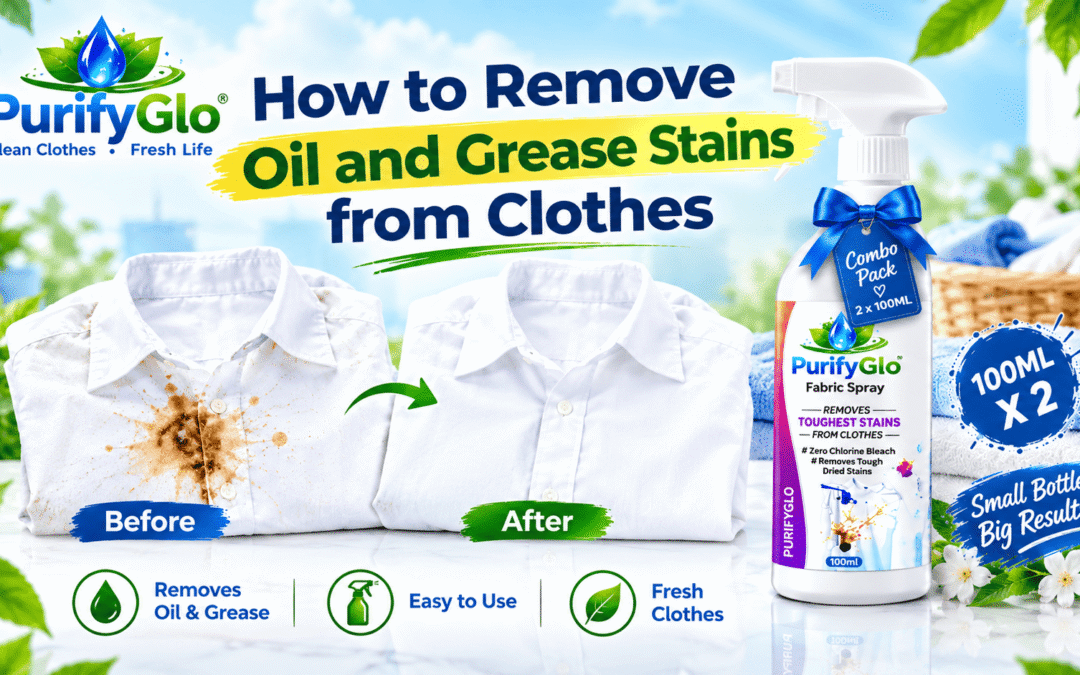
How to Remove Oil and Grease Stains from Clothes
Oil and grease stains on clothes can be frustrating, especially when they appear on your favourite shirts, trousers, uniforms or everyday outfits. Whether the stain comes from cooking oil, butter, food spills or machine grease, the right cleaning method can help you remove it without damaging the fabric.
If you are wondering how to remove oil and grease stains from clothes, this guide explains simple home remedies, useful washing tips and how to choose a suitable fabric stain remover.
Why Are Oil and Grease Stains Difficult to Remove?
Oil and grease do not dissolve easily in water. When they come into contact with fabric, they can cling to the fibres and leave dark, greasy marks. Washing the garment immediately with water alone may not remove the stain completely.
The best approach is to absorb excess oil, treat the affected area and wash the garment according to its care label.
5 Easy Ways to Remove Oil and Grease Stains from Clothes
1. Blot the Excess Oil
As soon as you notice an oil stain, gently blot the area with a clean paper towel or cloth. Avoid rubbing the stain because this may spread the grease deeper into the fabric.
Tip: Treat the stain as soon as possible for better results.
2. Use Baking Soda to Absorb Grease
Baking soda can help absorb excess oil from suitable fabrics.
How to use it:
- Sprinkle baking soda over the stain.
- Leave it for around 15–30 minutes.
- Gently brush away the powder.
- Continue with an appropriate stain-treatment method and wash as directed on the care label.
For delicate fabrics, test the method on a hidden area first.
3. Try Dishwashing Liquid on Suitable Fabrics
Dishwashing liquid is designed to help cut through grease and may be useful for treating certain washable garments.
Steps to follow:
- Apply a small amount to the stained area.
- Gently work it into the stain without scrubbing aggressively.
- Rinse according to the product instructions.
- Wash the garment using the recommended water temperature.
Always test first, particularly on coloured fabrics, and avoid using this method on garments that require dry cleaning.
4. Use a Fabric Stain Remover
A suitable fabric stain remover can make stain treatment easier, particularly when dealing with everyday food and oil marks.
For best results:
- Read the product label before use.
- Test the product on an inconspicuous area.
- Apply it as directed.
- Allow the recommended treatment time.
- Wash the garment according to its care instructions.
PurifyGlo Fabric Stain Remover can be considered as part of your laundry stain-treatment routine. Check the product label to confirm that it is suitable for the garment and the type of stain you are treating.
5. Wash and Check Before Drying
After treating the stain, wash the garment according to its care label. Check the affected area before putting the clothing in a dryer or exposing it to high heat.
If the stain remains, repeat a suitable treatment before drying. Heat can make some stains more difficult to remove.
How to Remove Old Oil and Grease Stains from Clothes
Old grease stains can be more challenging because the oil may have settled into the fabric fibres.
Follow these steps:
- Check the garment’s care label.
- Apply an appropriate stain-treatment product.
- Let it work for the time specified on its label.
- Wash the garment using the recommended settings.
- Inspect the stain before drying.
Some old stains may require more than one treatment. Results depend on the fabric, stain type and how long the stain has been present.
How to Remove Grease Stains from Different Fabrics
Different fabrics need different care methods. Always follow the garment’s washing instructions.
- Cotton: Many cotton garments can be treated with a suitable laundry stain remover and washed normally.
- Polyester: Treat the stain with a fabric-compatible product and avoid excessive heat.
- Coloured clothes: Test the treatment on a hidden area to check colourfastness.
- Delicate fabrics: Silk, wool and other delicate materials may require specialist care.
- White clothes: Use only products suitable for white fabrics and avoid harsh treatments that may damage the material.
For dry-clean-only clothing, consult a professional cleaner instead of experimenting with home remedies.
Common Mistakes to Avoid When Removing Oil Stains
Avoid these common laundry mistakes:
- Rubbing the stain aggressively.
- Using hot water before checking the fabric and stain-treatment instructions.
- Applying bleach without confirming that it is suitable for the garment.
- Mixing different cleaning products.
- Skipping the patch test on coloured or delicate fabrics.
- Drying clothing before checking whether the stain has disappeared.
A gentle, fabric-appropriate treatment is usually a better starting point than harsh scrubbing.
How Can You Keep Your Clothes Fresh and Clean?
Preventing stains from setting can make laundry easier. Blot spills quickly, treat stains before washing, separate garments according to their care requirements and use suitable laundry products.
Choosing the right stain remover for your fabric can also help simplify your cleaning routine.
Explore PurifyGlo Fabric Cleaning Products to find suitable options for your laundry-care needs. Always read the instructions before applying any cleaning product to clothing.
Frequently Asked Questions (FAQs)
1. How do I remove oil stains from clothes at home?
Blot excess oil, apply a suitable absorbent such as baking soda if appropriate, treat the stain with a fabric-compatible product and wash according to the care label.
2. Can old grease stains be removed from clothes?
Old grease stains may be removable, but results depend on the fabric, stain and previous washing or drying. Repeat a suitable treatment if necessary.
3. Does baking soda remove grease stains?
Baking soda can absorb some excess oil. However, it may not remove the entire stain, so additional fabric-safe treatment may be needed.
4. Should I use hot water on oil stains?
Not automatically. Check the garment’s care label and the stain remover’s instructions before choosing a water temperature. Avoid high heat until you have checked whether the stain has been removed.
5. Can I use fabric stain remover on coloured clothes?
Only if the product label confirms that it is suitable for coloured fabrics. Test it on a hidden area before treating the visible stain.
6. What is the best way to remove grease stains from a shirt?
Blot the excess grease, treat the affected area with a suitable product and wash the shirt according to its care label. Check the stain before drying.