
How to Clean White Shoes at Home: Easy Guide
White shoes look stylish, comfortable, and versatile, but they can quickly collect dust, mud, and everyday stains. Even a small mark can make your favorite sneakers look dirty. The good news is that you do not always need professional cleaning to keep your footwear looking fresh.
Learning how to clean white shoes at home can help you maintain their appearance with the right cleaning method, a few basic supplies, and regular care. In this guide, you will discover easy steps to clean white shoes, remove common stains, clean shoelaces, and prevent dirt from building up.
Why Do White Shoes Get Dirty So Easily?
White footwear shows dirt more clearly than darker shoes. Everyday walking can leave dust, mud, food marks, and stains on the surface. Sweat and moisture may also cause unpleasant odors, while improper cleaning can leave yellow marks or damage delicate materials.
The best cleaning method depends on whether your shoes are made from canvas, mesh, leather, synthetic materials, or suede. Always check the manufacturer’s care instructions before using any cleaning product.
What You Need to Clean White Shoes at Home
Before you start, gather the following supplies:
- A soft-bristled cleaning brush
- A clean microfiber cloth
- A small bowl of lukewarm water
- Mild soap or a suitable shoe cleaner
- An old toothbrush for hard-to-reach areas
- A clean towel
- A small container for cleaning shoelaces
Use only products suitable for your shoe material. Avoid soaking shoes unnecessarily, especially those with leather panels, glued components, or delicate finishes.
How to Clean White Shoes at Home Step by Step
Step 1: Remove Loose Dirt and Dust
Begin by removing the shoelaces and tapping the soles together gently to loosen dried dirt. Use a soft brush to remove dust, mud, and debris from the upper surface and outsole.
Brush gently around seams and textured areas. Removing loose dirt first helps prevent it from spreading across the shoe during cleaning.
Step 2: Prepare a Gentle Cleaning Solution
Mix a small amount of mild soap with lukewarm water. Avoid using excessive detergent because residue may remain on the shoe surface.
If you prefer a ready-made option, choose a shoe cleaning product specifically designed for your footwear material. Follow the label directions and test the product on a small, hidden area before cleaning the entire shoe.
Step 3: Clean the Shoe Surface Gently
Dip a soft brush or microfiber cloth into the cleaning solution and remove excess liquid. Gently clean the shoe using small circular motions.
Pay attention to visibly dirty areas, but avoid scrubbing too hard. For mesh and fabric shoes, use light pressure to protect the fibers. For smooth leather or synthetic uppers, a slightly damp cloth may be more appropriate.
Important: Suede and nubuck require specialized care. Avoid using the same wet-cleaning method on these materials unless the manufacturer’s instructions allow it.
Step 4: Remove Stains Carefully
Some marks may need extra attention. Apply a small amount of suitable shoe cleaner to the affected area and gently work it in using a soft brush or cloth.
For stubborn stains, repeat the gentle cleaning process rather than applying excessive force. Avoid chlorine bleach, harsh chemicals, and untested home remedies, as they may discolor the material or weaken the shoe’s construction.
Always follow the cleaning product’s instructions and test it in an inconspicuous spot first.
Step 5: Clean the White Soles
White rubber soles often collect dirt, scuff marks, and grime. Use a soft brush or toothbrush with a suitable mild cleaning solution to clean the outsole and edges.
Work carefully around the seam between the sole and upper material. Wipe away loosened dirt with a clean, damp cloth.
Avoid aggressive scrubbing that could damage the finish or separate glued components.
Step 6: Wash the Shoelaces Separately
Place removable shoelaces in a bowl of lukewarm water with a small amount of mild detergent. Gently rub them to loosen dirt, then rinse thoroughly.
Allow the laces to air-dry completely before putting them back on the shoes. Check the care instructions first if the laces have special coatings or decorative details.
Step 7: Remove Cleaning Residue
Use a clean, lightly damp microfiber cloth to remove any remaining soap or shoe-cleaner residue, following the product instructions.
Do not leave excess water inside the shoes. Blot the surface gently with a clean towel and reshape the shoes if needed.
Step 8: Let Your White Shoes Air-Dry
Allow your shoes to air-dry in a well-ventilated area away from direct sunlight and strong heat. You can place clean paper inside the shoes to help absorb moisture and maintain their shape.
Avoid using a hair dryer, radiator, or tumble dryer unless the manufacturer specifically permits it. Excessive heat may cause shrinking, discoloration, or damage to adhesives.
Wait until your shoes are completely dry before wearing them again.
How to Clean White Sneakers Without Damaging Them
White sneakers can be made from several materials, so choosing the correct cleaning method is essential.
- Canvas shoes: Use a soft brush and mild cleaning solution. Avoid excessive soaking.
- Mesh shoes: Brush gently and use minimal moisture to protect the fabric.
- Leather shoes: Wipe with a slightly damp cloth and a cleaner suitable for leather.
- Synthetic shoes: Use a gentle cleaner approved for the specific material.
- Suede shoes: Use a suede brush and suitable suede-cleaning products. Avoid ordinary wet-cleaning methods unless recommended by the manufacturer.
Always check the care label and test new products on a hidden area before applying them to visible surfaces.
Common Mistakes to Avoid When Cleaning White Shoes
To keep your footwear looking its best, avoid these common mistakes:
- Using too much water: Excess moisture may damage certain materials and adhesives.
- Scrubbing too aggressively: Hard brushing can wear down fabric, mesh, and surface finishes.
- Applying bleach without checking compatibility: Bleach may cause yellowing, discoloration, or material damage.
- Drying in direct sunlight: Strong sunlight and heat can affect the shoe’s color and shape.
- Ignoring cleaning instructions: Different materials need different care methods.
- Putting shoes away while damp: Moisture can contribute to unpleasant odors and other problems.
Gentle cleaning and proper drying are often better than harsh treatments.
How to Keep White Shoes Clean for Longer
Regular maintenance can reduce the need for deep cleaning. Follow these simple tips:
- Brush off loose dirt after wearing your shoes outdoors.
- Wipe away fresh marks before they become harder to remove.
- Store shoes in a clean, dry, well-ventilated place.
- Keep shoelaces clean and replace them when necessary.
- Consider a compatible protective spray if recommended for your shoe material.
- Avoid wearing delicate white footwear in conditions that may cause heavy staining.
- Clean your shoes regularly instead of waiting until dirt has accumulated.
Small cleaning habits can help preserve the appearance of your favorite footwear.
Can a Shoe Cleaning Foam Help Clean White Shoes?
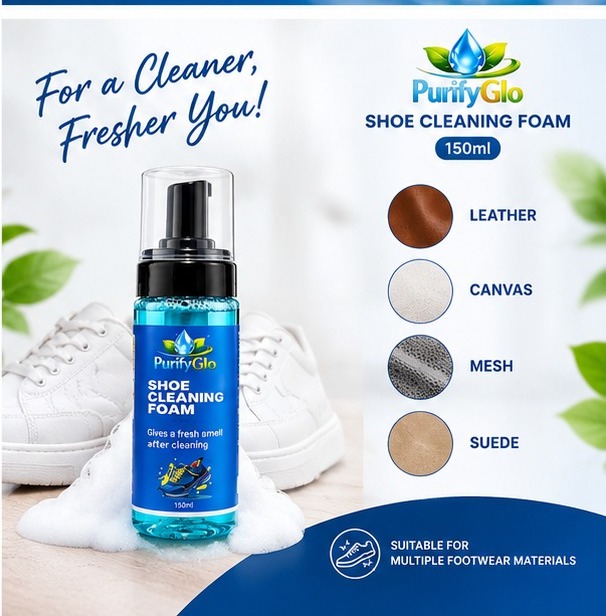
A suitable shoe cleaning foam can make routine cleaning more convenient. Depending on its formulation and the shoe material, it may help loosen everyday dirt without requiring a large amount of water.
If you choose a waterless shoe cleaning foam, read the product label carefully. Apply it only to compatible materials, use the recommended quantity, and test it on a hidden area first. “Waterless” does not necessarily mean suitable for every type of footwear.
At PurifyGlo, we believe that practical shoe-care routines should be simple and easy to follow. Explore our shoe-cleaning products to find an option that matches your footwear and cleaning needs.
Choose a cleaner based on your shoe material, always follow the product instructions, and avoid promising stain removal results that have not been verified.
Frequently Asked Questions
1. What is the easiest way to clean white shoes at home?
Remove loose dirt with a soft brush, use a suitable mild cleaning solution, gently clean the surface, wipe away residue, and let the shoes air-dry away from direct sunlight.
2. How often should I clean white shoes?
Clean them whenever visible dirt appears. Light brushing and wiping after use can help reduce buildup, while deeper cleaning should depend on how often you wear them and the shoe material.
3. Can I use toothpaste to clean white shoes?
Toothpaste is not recommended as a universal shoe cleaner. Some formulas contain abrasives, whitening agents, or ingredients that may leave residue or damage certain materials. Use a cleaner designed for your shoes instead.
4. Why do white shoes turn yellow after cleaning?
Yellowing may result from cleaning-product residue, unsuitable chemicals, oxidation, heat, or drying conditions. Use compatible products, remove residue properly, and air-dry shoes away from strong sunlight and heat.
5. Can I put white shoes in a washing machine?
It depends on the shoe’s construction and manufacturer’s instructions. Some fabric shoes may be machine-washable, but leather, suede, glued components, and delicate footwear may be damaged. Check the care label before washing.
6. Can shoe cleaning foam be used on every material?
No. Different materials react differently to cleaning products. Check the label and confirm that the foam is suitable for your shoes before applying it.